Dexterous Hand Actuator: Technical Architecture, Design Trends, and Motor Integration
How Actuators and Dexterous Hand Motors Work Together
Introduction: From Dexterous Hand Motor to System-Level Actuation
In humanoid robots and advanced robotic grippers, dexterous hand performance is no longer defined by a single motor.
Instead, it is determined by how well the Dexterous Hand Actuator integrates the Dexterous Hand Motor, transmission, sensing, and control into a compact and reliable system.
👉 For a detailed explanation of motor selection and performance metrics, see our guide on Dexterous Hand Motor.
This article focuses on the actuator-level architecture, explaining how motors become functional motion units in real robotic hands.
1. What Is a Dexterous Hand Actuator?
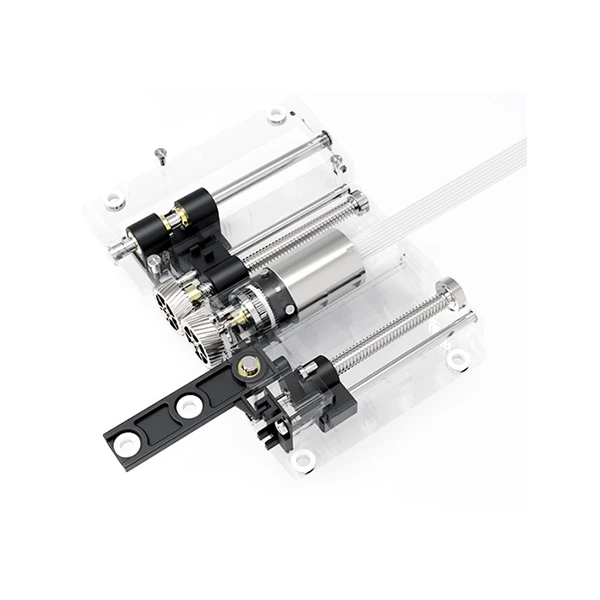
A Dexterous Hand Actuator is a system-level module that converts electrical energy into precise, controllable finger motion.
Unlike a standalone motor, an actuator typically integrates:
-
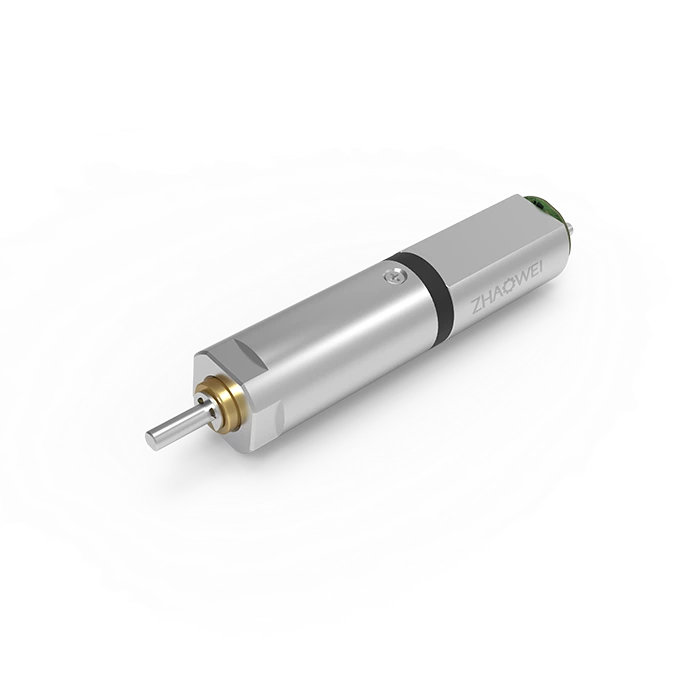
A Dexterous Hand Motor
-
A precision gearbox or transmission system
-
Position / velocity / force feedback (encoder or sensors)
-
Mechanical output elements (shaft, tendon interface, lead screw)
-
Control and drive interfaces
In practice, the motor defines the performance ceiling, while the actuator defines how usable and stable that performance becomes.
2. Dexterous Hand Actuator vs. Dexterous Hand Motor
| Aspect | Dexterous Hand Motor | Dexterous Hand Actuator |
|---|---|---|
| Functional Role | Motion source | Motion + control execution |
| Core Focus | Torque, speed, efficiency | Precision, stability, integration |
| Integration Level | Component-level | System-level |
| Typical User | Motor engineers | Robot & hand designers |
👉 If you are still comparing motor specifications such as torque density, backlash, or response speed, refer to our Dexterous Hand Motor FAQ before finalizing actuator architecture.
3. Why Actuator Design Matters More Than Motor Specs Alone
Even a high-performance dexterous hand motor can underperform if actuator design is weak.
Key actuator-level challenges include:
-
Miniaturization constraints within finger joints
-
Backlash accumulation from transmission systems
-
Thermal management in continuous grasping tasks
-
Force controllability, not just position accuracy
This is why modern robotic hands increasingly prioritize integrated dexterous hand actuators, rather than assembling motors and gearboxes separately.
4. Main Dexterous Hand Actuator Architectures
4.1 Joint-Integrated Actuators (Motor + Gearbox in Finger)
These actuators place the dexterous hand motor directly inside the finger joint.
Advantages
-
Compact structure
-
Fast response
-
Simple control model
Trade-offs
-
Thermal dissipation
-
Limited torque scaling
👉 This architecture requires high torque density dexterous hand motors, making motor selection critical.
4.2 Tendon-Driven Actuator Systems
In tendon-driven designs, motors are placed remotely and transmit force via cables.
Advantages
-
Lightweight fingers
-
Human-like motion
Challenges
-
Tension control
-
Cable wear and hysteresis
👉 Tendon-driven systems rely on stable, low-backlash dexterous hand motors to maintain control accuracy over distance.
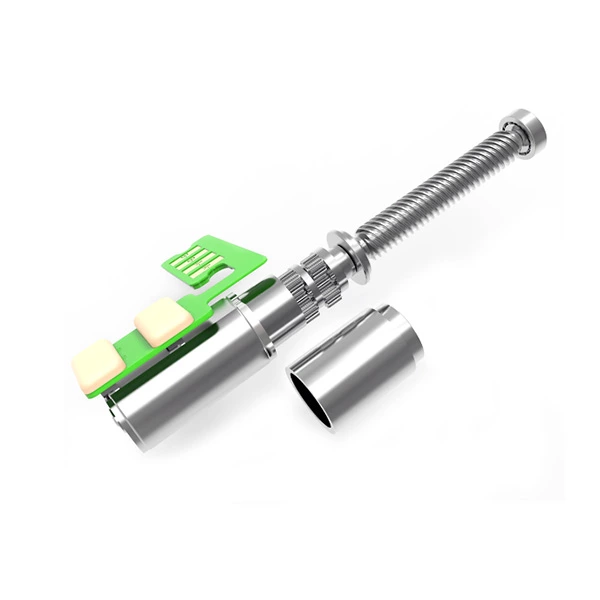
4.3 Lead Screw / Planetary Gear-Based Actuators
These actuators emphasize holding force and positional stability, often used for power grasping.
They combine:
-
Dexterous hand motor
-
High-ratio planetary gearbox or screw mechanism
This approach trades speed for precision and load retention.
5. Key Performance Metrics at the Actuator Level
When evaluating a Dexterous Hand Actuator, engineers should look beyond motor datasheets and consider:
-
Torque density (system-level)
-
Backlash and hysteresis
-
Position and force resolution
-
Control bandwidth
-
Thermal behavior under load
-
Consistency across production batches
👉 Many of these metrics are directly influenced by the internal dexterous hand motor, reinforcing the importance of motor–actuator co-design.
6. ZHAOWEI’s Approach to Dexterous Hand Actuator Design
ZHAOWEI focuses on motor–actuator integration, rather than treating motors as isolated components.
Key strengths include:
Precision Micro Transmission Systems
ZHAOWEI’s expertise in micro gears and planetary reduction enables low-backlash, high-efficiency transmission, maximizing the usable output of each dexterous hand motor.
Integrated Motor-Actuator Modules
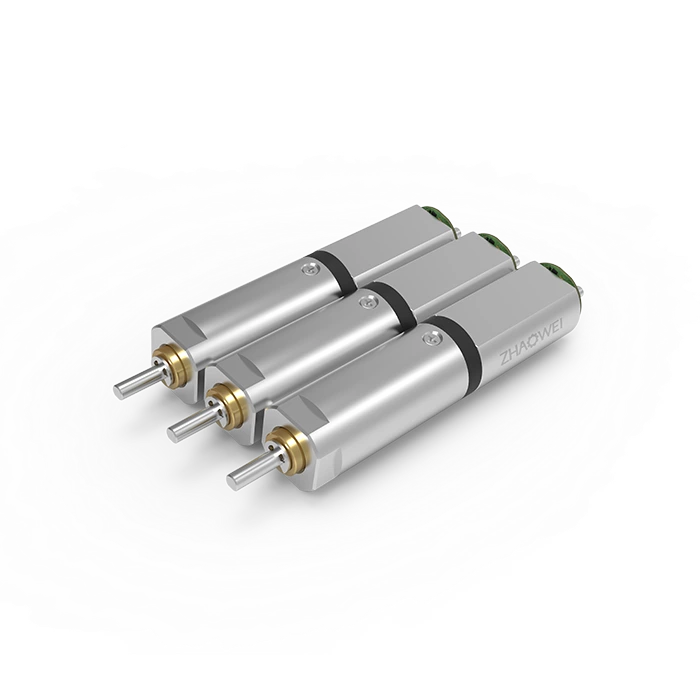
By integrating dexterous hand motors, gearboxes, and encoders into compact actuator modules, system complexity is reduced and development cycles are shortened.
Application-Oriented Customization
Actuators can be tailored for:
-
Finger joint integration
-
Tendon-driven architectures
-
Different torque-speed profiles
This ensures that the dexterous hand motor and actuator are optimized as one system.
7. Future Trends: From Motors to Intelligent Actuators
The evolution of robotic hands is driving actuators toward:
-
All-in-one dexterous hand actuator modules
-
Higher power density dexterous hand motors
-
Built-in force sensing and feedback
-
Designs optimized for scalable production
In this trend, the boundary between “Dexterous Hand Motor” and “Dexterous Hand Actuator” continues to blur—they are increasingly designed together, not separately.
Conclusion: Actuators Are Where Dexterous Hand Motors Become Real Capability
A dexterous hand motor defines potential performance, but it is the actuator that determines real-world manipulation quality.
By combining:
-
High-performance dexterous hand motors
-
Precision micro transmission
-
Integrated actuator design
ZHAOWEI delivers solutions that support stable, precise, and scalable dexterous hand systems.