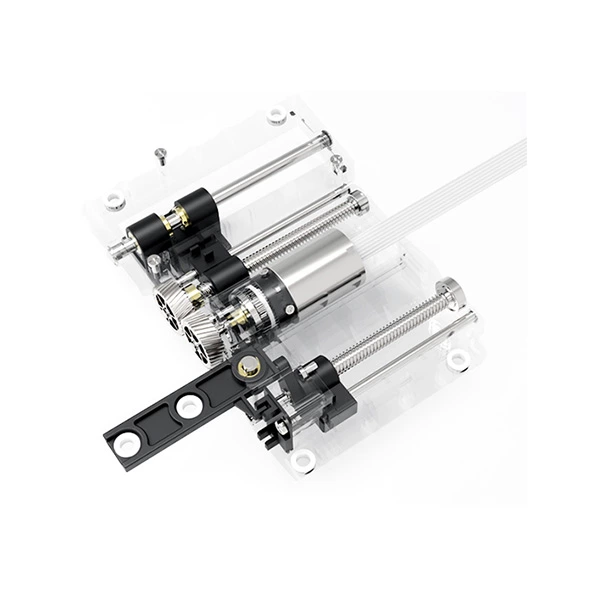
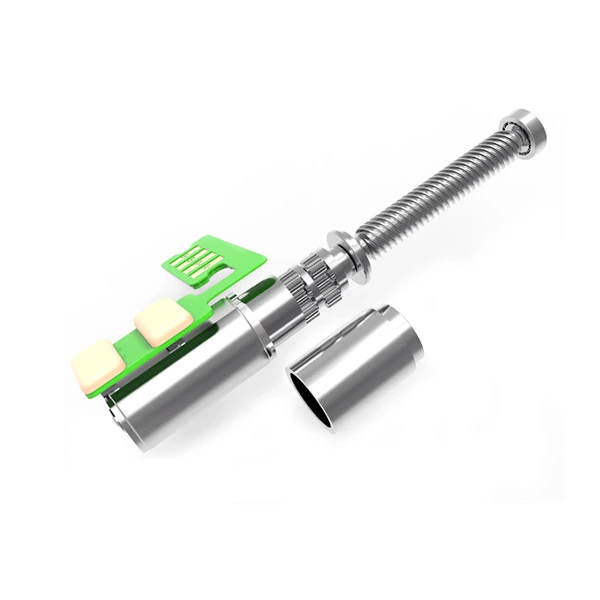
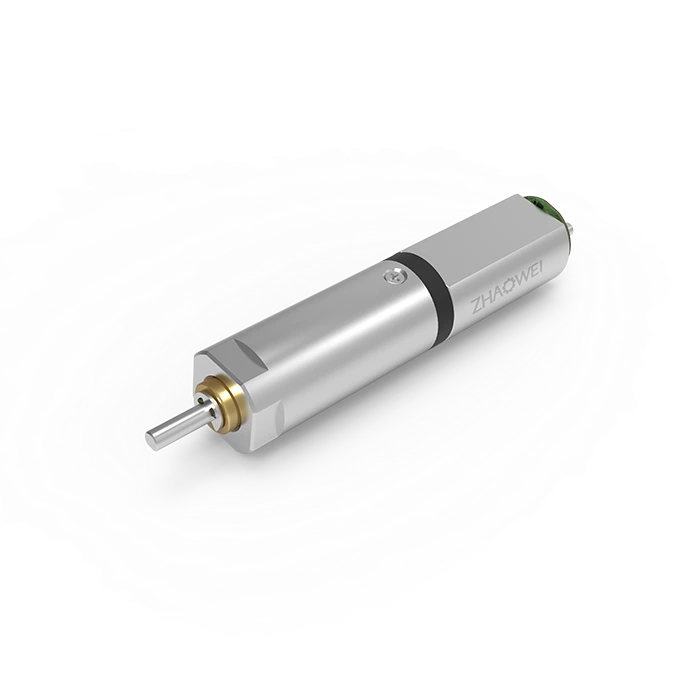
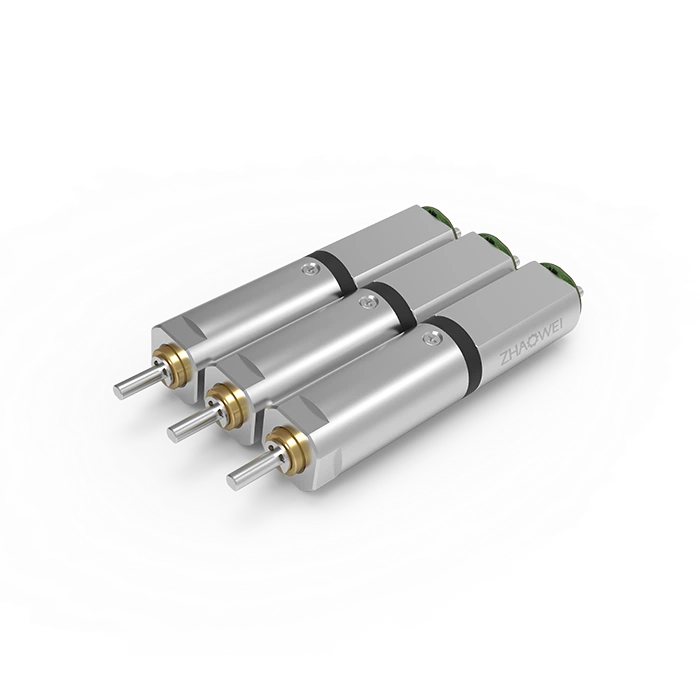
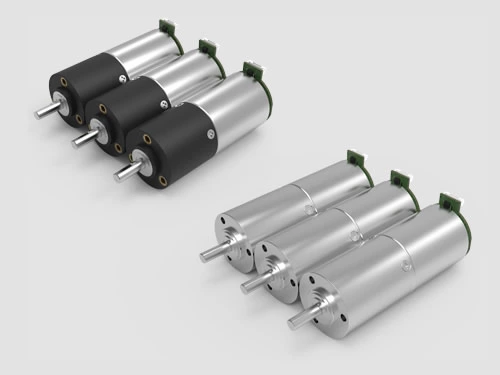
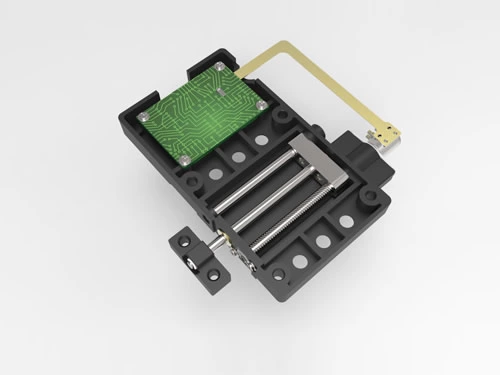
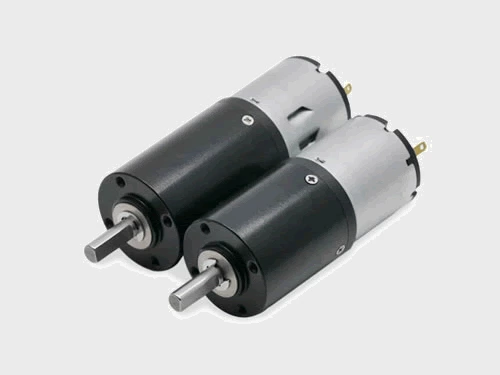
A planetary gear set is a compact gear transmission assembly consisting of a sun gear, planet gears, an internal ring gear, and a planet carrier. When integrated into a planetary gearbox, one or more gear sets can be used to achieve the required speed reduction and torque transmission.
For engineers selecting a planetary gear set, the number of stages is an important consideration. Single-stage and multi-stage planetary gearboxes differ in reduction ratio, overall length, mechanical efficiency, and transmission characteristics. Other factors, including backlash, gear materials, rated torque, and installation dimensions, also influence gearbox selection.
Single-Stage vs Multi-Stage Planetary Gear Sets
A planetary gearbox stage refers to one planetary gear transmission assembly. A single-stage gearbox contains one reduction stage, while a two-stage or three-stage gearbox connects multiple stages in series to achieve a higher overall reduction ratio.

Single-Stage Planetary Gearbox
A single-stage planetary gearbox uses one planetary gear set to transmit power from the input to the output. It is generally shorter than a comparable multi-stage design and introduces fewer gear mesh losses.
Common nominal reduction ratios in the original planetary gearbox article include 3:1, 4:1, 5:1, 7:1, and 10:1. These are examples rather than a universal range, as available ratios depend on the gear geometry and gearbox series.
Two-Stage Planetary Gearbox
A two-stage planetary gearbox contains two reduction stages connected in series. The output of the first stage drives the second stage, multiplying their individual reduction ratios.
This arrangement can provide higher overall reduction ratios without relying on one extremely high-ratio gear stage. However, the additional stage increases the axial length, component count, and cumulative transmission losses.
Examples listed in the original article include 15:1, 20:1, 30:1, 35:1, 40:1, 50:1, 70:1, 90:1, and 100:1. Actual ratio availability should be confirmed for the selected gearbox model.
Three-Stage Planetary Gearbox
A three-stage planetary gearbox uses three connected gear stages. It is considered when the required overall reduction ratio cannot be achieved with one or two stages in the available gearbox design.
Additional stages can provide lower output speeds but may increase gearbox length, weight, backlash, and power losses. The final configuration must also satisfy the gearbox's allowable torque and load conditions.
Planetary Gearbox Stage Comparison
| Feature | Single-Stage | Two-Stage | Three-Stage |
|---|---|---|---|
| Number of Reduction Stages | 1 | 2 | 3 |
| Overall Reduction Ratio | Generally lower | Higher ratios available | Suitable for still higher ratios |
| Axial Length | Generally shorter | Generally longer | Typically longest |
| Transmission Efficiency | Fewer stage losses | Additional stage losses | More cumulative stage losses |
| Backlash | Depends on gear design | Stage contributions must be considered | Accumulated effects require evaluation |
| Typical Selection Priority | Compactness and moderate reduction | Higher reduction within available space | Very low output speed and high reduction |
The final choice should not be based on stage count alone. Gearbox dimensions, rated output torque, efficiency, backlash, operating noise, and expected service life must be considered together.
How Gear Stages Affect Reduction Ratio and Torque
When planetary gear stages are connected in series, their individual reduction ratios are multiplied to obtain the total reduction ratio.
Total Reduction Ratio = Stage 1 Ratio × Stage 2 Ratio × Stage 3 Ratio
For example, if a two-stage planetary gearbox combines a 4:1 first stage with a 5:1 second stage, its overall reduction ratio is 20:1.
For a motor operating at 3,000 RPM, the theoretical output speed would be:
Output Speed = 3,000 RPM ÷ 20 = 150 RPM
Gear reduction also increases the available output torque relative to the input torque. However, the actual torque depends on the transmission efficiency of each stage and the gearbox's rated load capacity.
Estimated Output Torque = Input Torque × Total Reduction Ratio × Overall Gearbox Efficiency
For a multi-stage gearbox, overall efficiency depends on the efficiency of the individual stages. More stages typically introduce additional mechanical losses, although the actual difference depends on gear design, lubrication, load, and operating speed.
Increasing the reduction ratio does not mean the gearbox can safely transmit unlimited torque. Engineers must check the rated and peak torque limits of the complete assembly.
Understanding Planetary Gearbox Backlash
Backlash is the small amount of rotational clearance between meshing gears and within the transmission mechanism. It can appear as lost motion when the direction of torque is reversed.
Planetary gearbox backlash is commonly expressed in arc minutes. One arc minute equals 1/60 of a degree.
In a typical gearbox backlash test, the input shaft is restrained, and a specified reversing torque is applied to the output shaft. The resulting angular movement is measured according to the manufacturer's test conditions. Testing methods and torque levels may vary between gearbox designs.
Backlash is particularly important in applications involving frequent direction changes, positioning movements, or repeated start-stop operation.
Gear tooth clearances, manufacturing tolerances, shaft and bearing support, gearbox assembly, and wear all influence backlash. Multi-stage gearboxes require additional consideration because the clearances of successive stages can contribute to the total lost motion at the output.
Although the original ZHAOWEI product article mentions backlash values of 1–2 arc minutes, such values should be treated as specifications for applicable configurations rather than a standard guarantee for every planetary gearbox.
Planetary Gear Set Materials and Construction
Planetary gear sets can use different materials and manufacturing processes according to load requirements, operating noise, durability, production volume, and cost.
The original ZHAOWEI planetary gear set article identifies three main construction categories: plastic gears, powder metallurgy gears, and machined gears.

| Gear Construction | Characteristics | Selection Considerations |
|---|---|---|
| Plastic Gears | Lightweight, suitable for compact designs, and potentially quieter under appropriate conditions | Material strength, temperature, wear, and operating load |
| Powder Metallurgy Gears | Can provide repeatable gear geometry and economical production for suitable designs | Material density, strength, wear resistance, and torque requirements |
| Machined Metal Gears | Allow selected material grades, tooth geometries, and precision machining processes | Required accuracy, strength, manufacturing cost, and surface treatment |
No single gear material is suitable for every application. For example, compact consumer devices may prioritize weight and noise, while robotic or industrial mechanisms may place greater emphasis on load capacity, transmission accuracy, and service life.
Micro Planetary Gearbox Specifications
Micro planetary gearboxes are commonly used when limited installation space must be balanced with torque transmission and speed reduction requirements.
ZHAOWEI's earlier product documentation lists a range of micro planetary gearbox specifications. These figures describe the historical product range referenced in that article and should be verified against the current model datasheet before use in a new design.
| Parameter | Range Listed in Original Article |
|---|---|
| Outer Diameter | 3.4–38 mm |
| Output Speed | 5–2,000 RPM |
| Reduction Ratio | 5:1–1,500:1 |
| Output Torque | 1 gf·cm–50 kgf·cm |
| Operating Voltage | 3–24 V |
| Output Power | 0.02–10 W |
| Transmission Noise | Within 45 dB, under unspecified test conditions |
| Backlash | 1–2 arc minutes for specified configurations |
The listed values should not be interpreted as simultaneous specifications for one gearbox. Electrical ratings such as voltage and motor output power apply to motorized assemblies rather than a gearbox operating independently. Noise and backlash values also require defined measurement conditions.
Planetary Gearbox Product Series
The earlier product information identifies the ZWBPD, ZWPD, ZWBMD, and ZWMD series. These historical series references may help identify existing equipment or product documentation.
- ZWBPD Series: ZWBPD006006, ZWBPD010010, ZWBPD016016, ZWBPD020020, ZWBPD022022, ZWBPD024024, ZWBPD028028.
- ZWPD Series: ZWPD008008, ZWPD012012, ZWPD032032.
- ZWBMD Series: ZWBMD003003, ZWBMD004004, ZWBMD006006, ZWBMD010010, ZWBMD020020, ZWBMD022022, ZWBMD024024, ZWBMD028028, ZWBMD032032.
- ZWMD Series: ZWMD008008, ZWMD012012, ZWMD016016, ZWMD038038.
Current availability, dimensions, performance ratings, and customization options should be confirmed with ZHAOWEI before selecting a specific series.
How to Select the Right Planetary Gear Set
Choosing a planetary gear set requires matching the gearbox design to the equipment's mechanical and operating conditions. The following factors should be evaluated before confirming a configuration.
- Required Reduction Ratio: Determine the motor input speed and target output speed to identify the necessary overall gear ratio.
- Number of Gear Stages: Choose a stage configuration that provides the required reduction ratio while remaining within the available installation space.
- Rated and Peak Torque: Check both continuous load requirements and temporary peak loads, including startup and acceleration conditions.
- Backlash Requirements: For positioning systems, evaluate allowable lost motion, reversing accuracy, and the complete drive control arrangement.
- Gear Materials: Select materials according to mechanical load, noise requirements, wear resistance, operating temperature, and expected life.
- Dimensions and Output Configuration: Confirm outer diameter, overall length, shaft geometry, mounting arrangement, and integration with the motor or driven mechanism.
- Duty Cycle and Reliability: Assess operating time, lubrication, environmental conditions, and expected service life.
For high-reduction-ratio applications, engineers should pay particular attention to the combined effects of stage count, efficiency, gearbox length, and output torque limits.
Planetary Gear Set Applications and Customization
Planetary gear sets are used in applications requiring compact power transmission, speed reduction, and suitable output torque. Industrial applications include lifting equipment, material handling machinery, transportation systems, and selected construction equipment.
Micro planetary gearboxes are also integrated into smart home products, medical instruments, robotic drive systems, consumer electronics, communication equipment, smart logistics devices, and automotive mechanisms.
ZHAOWEI develops compact planetary gearbox and customized drive solutions for applications with different requirements for gear ratio, output torque, dimensions, noise, backlash, and mechanical integration.
For a broader explanation of the sun gear, planet gears, ring gear, and basic operating principle, see What Is a Planetary Gear and How Does It Work?. For specific gearbox configurations, explore ZHAOWEI's precision gearbox solutions or submit your requirements through its customization service.