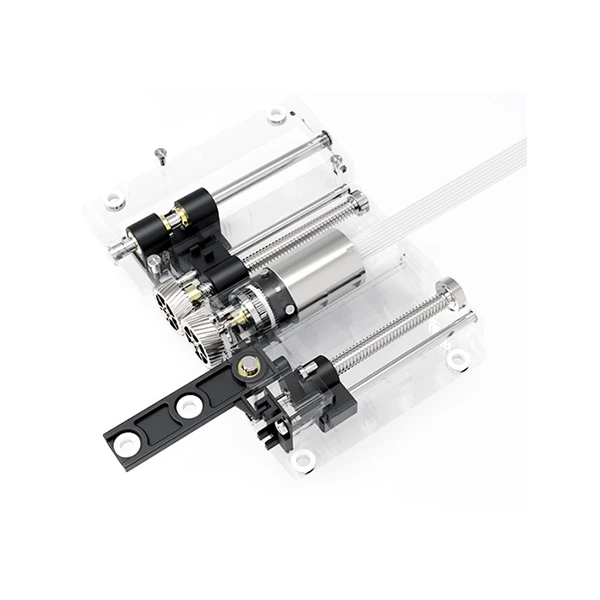
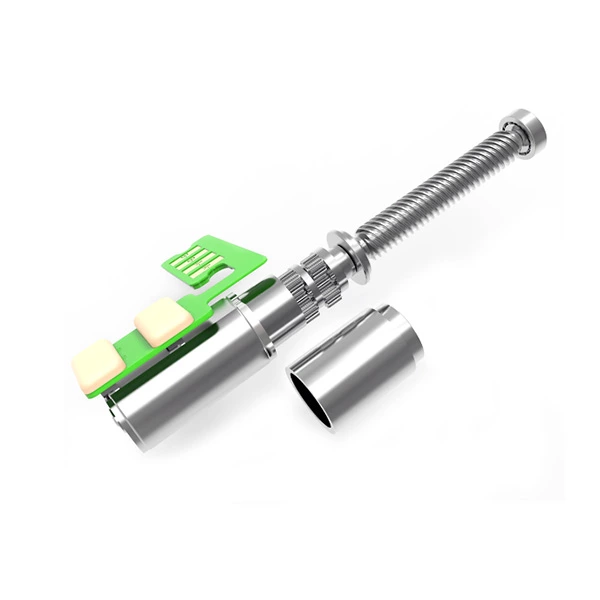
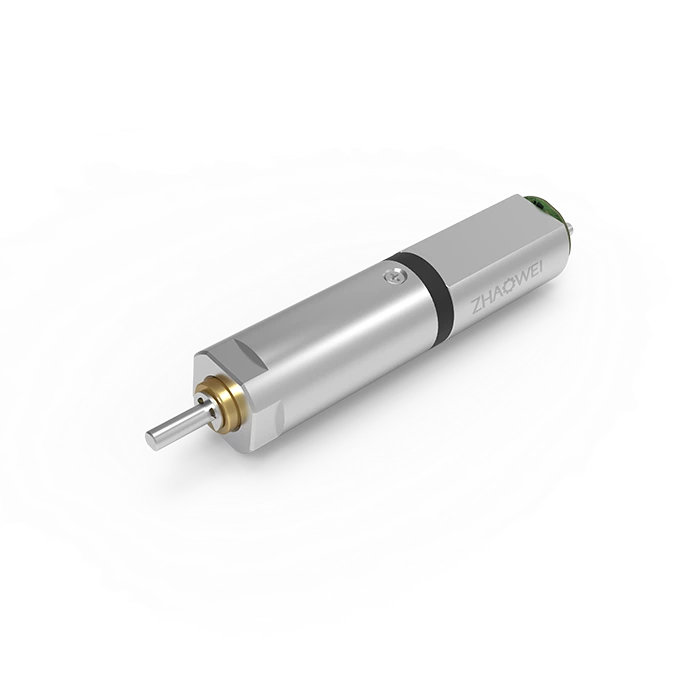
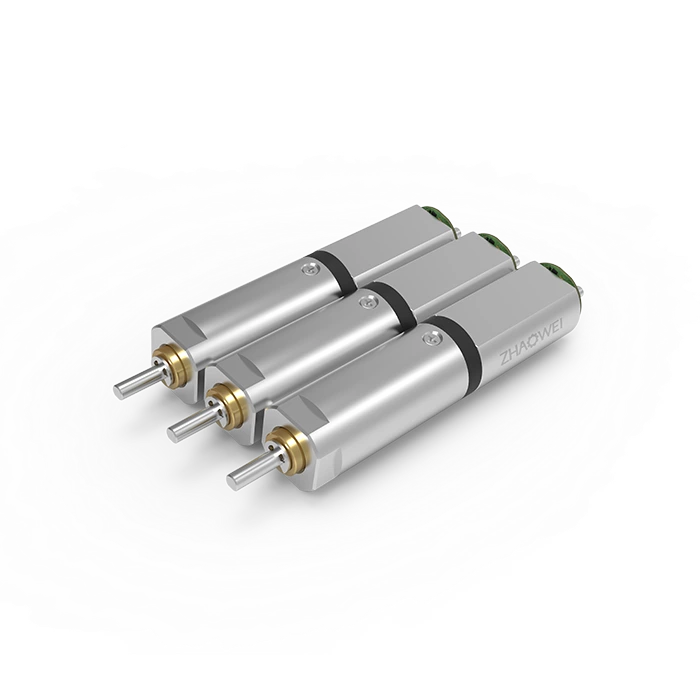
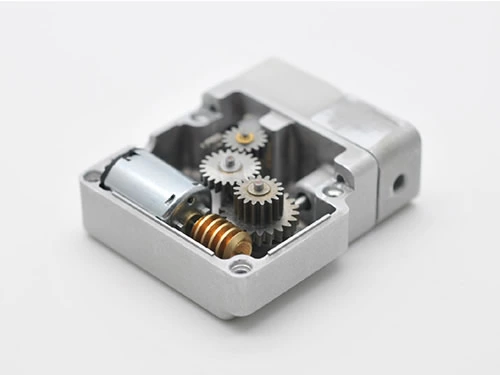
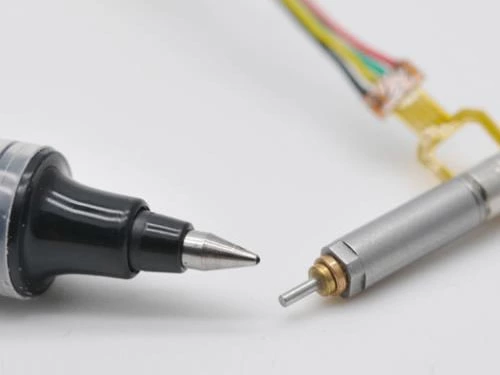
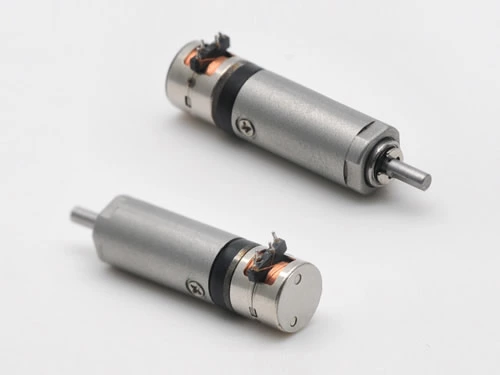
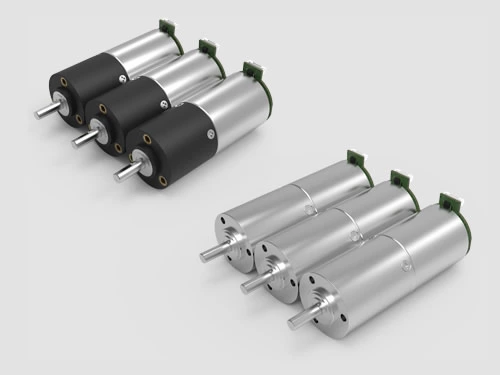
A gear reduction motor is an electric motor combined with a gearbox to reduce output speed and increase torque. It is widely used in robotics, automotive systems, smart home devices, medical equipment, and industrial automation.
Compared with a standard motor, a gear reduction motor provides stronger output force in a compact size, making it ideal for space-limited applications that require precise motion control.
How Does a Gear Reduction Motor Work?
A gear reduction motor uses internal gears to decrease the speed of the motor shaft while multiplying torque. In most designs, a small input gear drives a larger output gear. This transmission lowers RPM and increases output force.
Gearboxes can contain single-stage or multi-stage gear sets depending on the required reduction ratio. The higher the reduction ratio, the lower the speed and the greater the torque output.
Gear Reduction Ratio Explained
The reduction ratio is the relationship between motor input speed and gearbox output speed.
Formula: Reduction Ratio = Input Speed ÷ Output Speed
Example: If the motor runs at 3000 RPM and the output shaft rotates at 100 RPM, the gear ratio is 30:1.
Common Types of Gear Reduction Motors
Planetary Gear Motor
Planetary gear motors offer compact size, high torque density, smooth transmission, and excellent precision. They are ideal for robotics, smart devices, and automation systems.
Spur Gear Motor
Spur gear motors feature a simple structure and cost-effective performance. They are commonly used in household products, vending machines, and basic drive systems.
Worm Gear Motor
Worm gear motors provide quiet operation and self-locking capability. They are widely used in lifting devices, doors, and positioning systems.
Helical Gear Motor
Helical gear motors run smoothly with lower noise and higher efficiency, making them suitable for industrial conveyors and continuous-duty machinery.
Gear Reduction Motor vs Standard Motor
| Feature | Gear Reduction Motor | Standard Motor |
|---|---|---|
| Output Speed | Low / Controlled | High |
| Output Torque | High | Lower |
| Precision Control | Excellent | Basic |
| Compact Power | Yes | Limited |
| Best Use | Load Driving | Direct Rotation |
Main Advantages of Gear Reduction Motors
- Increase torque while reducing speed
- Save installation space with compact design
- Improve motion control accuracy
- Lower motor load and improve efficiency
- Wide voltage options such as 6V, 12V, and 24V
- Customizable gearbox ratios for different applications
Gear Reduction Motor Applications
Automotive Systems
Electric power steering (EPS), electric tailgate, parking brake systems, charging lock actuators, seat adjustment systems.
Smart Home Devices
Electric curtains, smart locks, lifting desks, automatic windows, home automation products.
Robotics
Robot joints, service robots, camera pan systems, feeders, motion modules.
Medical Devices
Surgical tools, pumps, rehabilitation equipment, portable medical instruments.
Consumer Electronics
Phone cameras, smart printers, grooming devices, vending machines, portable tools.
How to Choose the Right Gear Reduction Motor
When selecting a gear reduction motor, consider the following factors:
- Required output torque
- Target output speed (RPM)
- Operating voltage
- Duty cycle and lifespan
- Noise requirement
- Available installation space
- Control method and positioning accuracy
- Gear ratio required
Why Use a Gear Reduction Motor Instead of a Larger Motor?
Using a larger motor to directly achieve low speed and high torque usually increases size, weight, and cost. A compact motor with a gearbox delivers similar or better output performance while saving space and improving design flexibility.
Need a Custom Gear Reduction Motor Solution?
ZHAOWEI provides precision micro gear motors, planetary gear motors, and customized drive systems for automotive, robotics, medical, smart home, and industrial applications. Contact our engineering team for tailored solutions.
FAQ
What does a gear reduction motor do?
A gear reduction motor lowers output speed and increases torque for load-driving applications.
What is the difference between a gear motor and a standard motor?
A gear motor combines a motor with a gearbox, while a standard motor outputs direct speed without torque multiplication.
Which gear reduction motor is best?
Planetary gear motors are popular for compact high-torque precision systems, while worm gear motors are suitable for self-locking applications.
How do I calculate gear ratio?
Divide motor input RPM by output RPM. Example: 3000 RPM ÷ 100 RPM = 30:1.
Can gear reduction motors be customized?
Yes. Voltage, torque, speed, shaft type, gearbox ratio, encoder, and dimensions can all be customized for specific applications.